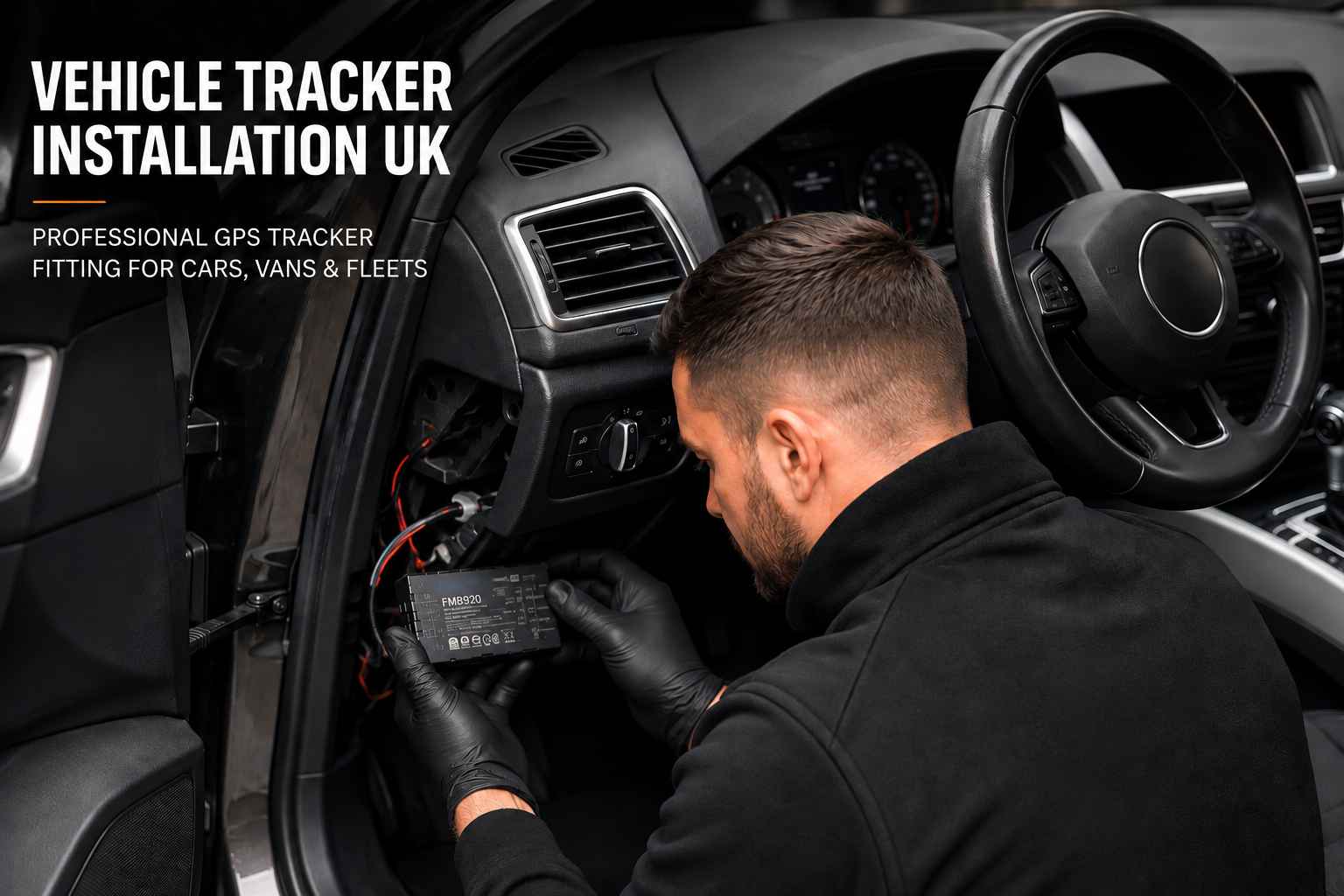
There isn't one installation method that works best for every vehicle. Your choice can depend on whether you want a permanent installation, need to move the tracker between vehicles or require an insurance-approved security system.
A hardwired GPS tracker requires direct access to your vehicle's power supply system and is installed secretly inside your vehicle. It is the best option for any instance where you need a permanent tracking device to remain in the car or have the convenience to get round-the-clock live tracking without access to any kind of plug-in point.
Best suited for:
ProTrak option: FMB920
Battery-mounted trackers connect directly to the vehicle battery, providing a straightforward alternative to traditional hardwiring. The device can be positioned discreetly while maintaining a reliable power connection.
Best suited for:
ProTrak option: FMT100
OBD GPS tracker installation is one of the simplest ways to start tracking a compatible vehicle. The device connects directly to the OBD port, without the need for complex wiring or a lengthy installation process.
This makes OBD trackers particularly useful if you have a leased vehicle, regularly change vehicles or want a tracker that can be easily transferred between compatible cars.
Best suited for:
ProTrak options:
Insurance-approved tracking devices can have specific fitting requirements depending on the device, vehicle and insurer. Professional installation helps ensure the security system is fitted correctly and meets the applicable requirements.
ProTrak options:
For additional vehicle security, the Scorpion X Series Immobiliser uses CAN-BUS integration and requires professional installation.
Choosing between professional and self-installation largely comes down to the type of tracker you're using.
Self-installation is suitable for compatible OBD trackers because they are designed to connect directly to the vehicle's diagnostic port.
Professional installation is more appropriate for hardwired, battery-mounted and insurance-approved systems where the device needs to be correctly connected, positioned and tested.
This gives customers a simple choice: quick and flexible OBD fitting, or a more permanent professionally installed system.
The exact process varies according to the tracker, but a professional GPS tracker installation generally involves:
Vehicle tracking systems can be installed across a wide range of vehicles, including:
The cost of vehicle tracker installation varies according to the type of device, the complexity of the fitting and whether you choose professional or self-installation.
OBD trackers are generally the most affordable option because they can be fitted quickly and easily without professional assistance. Hardwired, battery-mounted and insurance-approved trackers may require more time and expertise to install, which can increase the overall cost.
For a precise quote, contact our team to discuss your vehicle, tracking needs and installation preferences.

ProTrak is known for delivering top-quality vehicle tracking systems across the UK with unmatched reliability.